
Australia has taken a major step to “keep young people safe and mentally healthy” by becoming the first country to pass a new law – no social media accounts for anyone under 16. On the face of it, the aim is noble and sounds good, right? But whenever we talk about age limits online, a little alarm bell should go off in our heads: “What about the person’s privacy? How will they even know his/her age, and what happens to that information?” “Australia Social Media Ban: Privacy Rules for Age Verification” is the topic of this post.
Our “My Data Zero” team did some research and found out that the Australian government, knowing this would be a big concern, has put in some really strict rules about how tech companies handle personal data in this case. We’ll break it down simply for our community members.
But first, before getting into that, let’s quickly look at the new law:
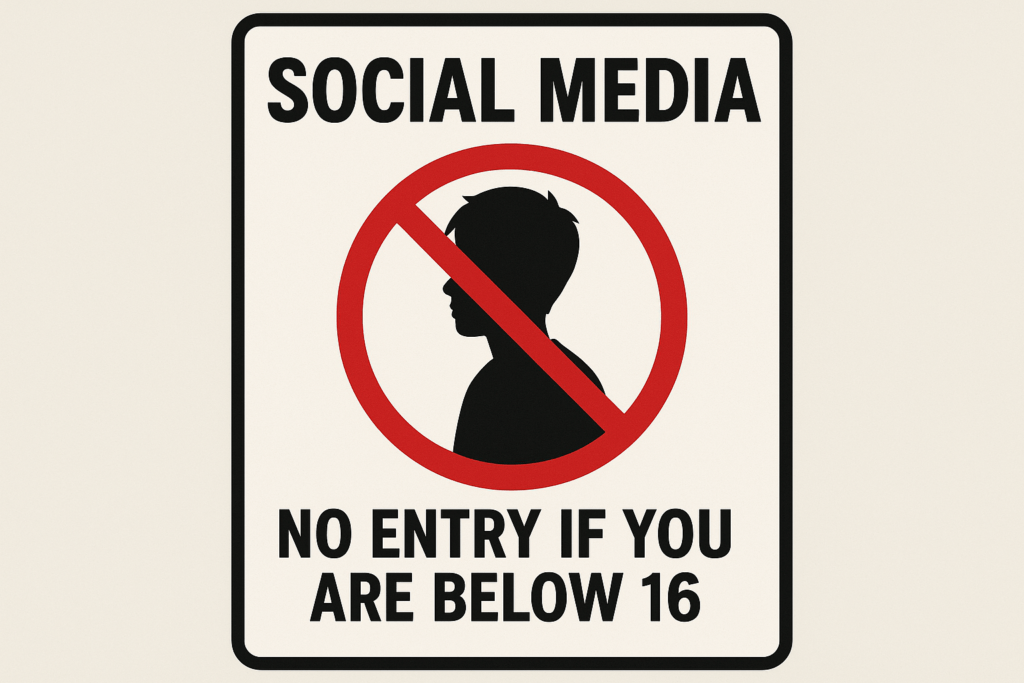
Imagine a digital “No Entry” sign for anyone under 16? That’s essentially what Australia has put up with its Online Safety Amendment (Social Media Minimum Age) Act 2024. This isn’t just a suggestion; it’s a new law that says if you’re under 16, you shouldn’t have an account on any major social media platforms. (Those of 16 years or more are allowed.)
Why the change? The Australian government, along with many parents and experts, has been increasingly worried about how social media affects young people. We’re talking about things like:
- Mental health struggles: The pressure to look perfect, constant comparisons, and exposure to intense content can really take a toll.
- Cyberbullying: It’s a harsh reality, and it can follow kids everywhere online.
- Harmful content: Sometimes, stuff pops up that no kid should ever see.
- Addiction: Those endless scrolls and notifications are designed to keep you hooked!
The goal is pretty clear: protect kids from these online harms.
What’s In, What’s Out? A Simple Guide!
Let’s talk about what this law actually covers and what it does not. After all, Australia Social Media Ban: Privacy Rules for Age Verification is the topic of this post.
What’s NOT Allowed (for under-16s):
You guessed it – having your own account on the big social media platforms. The law specifically targets platforms where you create a profile, post content, interact with others, and get a personalized feed. This includes the major players you’re probably thinking of:
- Threads
- TikTok
- YouTube (specifically accounts where you’re signed in and interacting)
- X (formerly Twitter)
- Snapchat
- Twitch
- Kick
If you’re under 16, you cannot create new accounts on these platforms, and if you already have one, the platforms are now expected to remove it.
What IS Allowed (or not covered by this specific law):
Don’t worry, the internet isn’t completely off-limits! This law has some specific boundaries:
- Messaging apps: Apps like WhatsApp and Telegram are generally not included, as their primary function is private messaging rather than public social sharing.
- Gaming platforms: Roblox, Discord, Minecraft, and other gaming-focused platforms are not currently covered. You can still game with your friends!
- Educational apps & tools: Anything used for school or learning is fine.
- Streaming services: Think Netflix or Disney+. You can still watch your shows!
- AI chatbots: Chatting with AI like ChatGPT isn’t covered.
- Passive viewing: You might still be able to watch public content on platforms like YouTube without logging in or creating an account, but you won’t be able to comment, post, or have a personalized feed.
The idea is to target the platforms designed for public social interaction and algorithmic feeds, not every corner of the Internet.
Here’s A Video You May Want To Watch
The Government’s Strict Playbook for Tech Companies (No Sneaky Business!)
The new Aussie law puts the responsibility squarely on the tech companies (Facebook, TikTok, etc.), not on individual kids or parents. These companies have to take “reasonable steps” to:
- Stop under-16s from creating new accounts.
- Find and remove existing accounts held by users under 16.
This is where it gets a bit tricky and where different platforms are trying out different solutions.
Now, turning to what it means for personal data privacy……Imagine the government telling big tech companies, “Okay, you need to check ages, but here are the EXACT rules – break them, and you’re in HUGE trouble!” That’s pretty much what’s happening.
Some of the methods being explored (or already in use) include:
Self-declaration backed by reporting: While easy to lie about, if enough people report an account as underage, the platform might investigate further.
AI-powered age estimation: Using things like facial analysis (not facial recognition in the traditional sense, but estimating age based on features).
Third-party age verification: Partnering with companies that specialize in verifying age using various data points (though this raises privacy concerns for some).
Asking for ID: Requiring users to upload a photo of an ID document (with privacy safeguards).
Parental verification/permission: Requiring a parent or guardian to confirm a child’s age or give permission for them to be on a platform.
- “Use It and LOSE It!” (Data Destruction)
- The Big Rule: If a social media company or a service they hire (called an “Age Assurance Provider”) collects personal info like a selfie or part of your ID to check your age, they MUST destroy it as soon as they’ve made their decision. They can’t keep it, not even for a little while, and they can’t just “hide” it. It has to be GONE.
- Why this matters for you: This is a HUGE win for your privacy! It means those super-sensitive details (like what your face looks like or your ID number) aren’t sitting around in a big database waiting to be hacked or used for something else.
- “Ring-Fencing” Your Face (Special Protection for Sensitive Data)
- The Big Rule: If a company uses something like a “face scan” to guess your age (not to recognize who you are, but just to estimate your age), the little digital “template” they create from your face must be kept in a super-secure, separate, digital vault. It’s like putting your most valuable jewelry in a bank vault, not just in your bedroom drawer.
- Why this matters for you: This stops companies from using your face data for other stuff – like targeting you with ads, building a big profile of you, or selling it to others. It’s only for checking your age, and then it’s deleted.
- No Demanding Your ID! (You Have Options)
- The Big Rule: Social media companies CANNOT force you to show a government ID (like a passport or driver’s license) to prove your age. They must offer other “reasonable alternatives.”
- Why this matters for you: This is super important! Not everyone has a government ID, and many people rightly feel uncomfortable sharing such sensitive documents online. This rule gives you choices, protecting you from having to hand over too much personal info.
- No Sneaky Repurposing! (Minimal Data Collection)
- The Big Rule: Companies have been told to collect the least amount of personal information possible just to check the age. If they already have some info about that person, they can’t just casually use it for this new age check unless it’s strictly necessary and allowed.
- Why this matters for you: It’s all about “data minimisation.” The less data collected about you for any purpose, the less there is to lose in a hack, and the less chance it has of being used in ways you didn’t agree to.
- You Can Appeal! (If They Get Your Age Wrong)
- The Big Rule: If a company says you’re under 16 but you know you’re not (or you’re actually 16+), they must have a clear way for you to challenge that decision. You can appeal it.
- Why this matters for you: Age estimation tech isn’t perfect! This gives you a voice and a way to correct mistakes, ensuring you’re not unfairly locked out.
If platforms don’t comply, they face some serious penalties – fines up to A$49.5 million (that’s about $32 million US dollars!). So, they’ve got a huge incentive to make this work. The eSafety Commissioner, Australia’s online watchdog, is in charge of enforcing this.
The Tricky Bits – Where YOUR Data Could Still Be at Risk
Even with all these strict rules, there are still some tricky parts to this new law, especially for parents and young people. This is where we need to be extra smart!
- The “Borrowing an Account” Problem (Risky Business!)
- The Big Question: What if you’re under 16 and your parent or an older friend lets you use their social media account? Or what if you lie about your age and use a fake ID?
- Why it’s risky for your data:
- For the Adult: If you use your parent’s account, their personal data (their friends, their posts, their private messages) is now being accessed by you. If you accidentally post something, or if the account gets hacked while you’re using it, their info is at risk.
- For the Minor: If you lie about your age or use fake info, it becomes much harder for anyone (parents, the platform, even law enforcement) to help you if you encounter cyberbullying, harmful content, or other dangers. You’re essentially “invisible” to the safety systems.
- Black Market: Regulators are worried that some people might try to buy “adult” accounts or fake IDs online. This is incredibly dangerous – these are often scams designed to steal your money or identity. Our Advise: NEVER engage with these!
- The “Moving to Less Safe Apps” Problem (Out of the Spotlight)
- The Big Question: This law mainly covers big social media platforms. What if under-16s just move to smaller messaging apps, gaming apps (like Discord or Roblox), or other corners of the internet that aren’t covered by this law?
- Why it’s risky for your data: Big social media companies (the ones covered by the law) have huge teams and budgets for security and privacy. Smaller apps or less-regulated parts of the internet might have weaker security, fewer privacy protections, and almost no oversight from regulators. Your personal data could be much less safe there.
Australia Social Media Ban: Privacy Rules for Age Verification: Why This is a Big Deal?
Australia is really making waves here! It’s one of the first countries in the world to implement such a broad and strict ban on social media for under-16s.
Why is it revolutionary?
- Shifting the burden: Instead of telling parents to police their kids, it tells tech giants THEY are responsible. This is a huge change!
- Global ripple effect: Other countries struggling with similar issues are watching closely. If it works in Australia, we might see similar laws pop up elsewhere.
- Prioritizing child welfare: It’s a clear statement that child safety and mental health are more important than platform engagement numbers.
But is it risky? Some folks worry about:
- Effectiveness: Will kids just find workarounds (using fake IDs, lying about age)?
- Privacy: What kind of data will platforms collect to verify age, and how will it be protected?
- Digital literacy: Should the focus be more on teaching kids how to use social media safely rather than banning it?
- Loss of connection: For some teens, social media is a vital way to connect with friends and community, especially for those in marginalized groups.
What Are Under-16s Saying? The Media Reactions!
Based on media reactions and informal polls, the mood among Australian under-16s is a real mixed bag, often leaning towards frustration and confusion.
- “It’s unfair!” Many feel like they’re being punished for the actions of a few or that their ability to connect with friends is being unfairly restricted.
- “We’ll just find a way around it.” There’s a strong sense of determination to bypass the rules, which raises concerns about the law’s effectiveness.
- “Why ban it instead of teaching us?” Some teens express a desire for more education on safe online practices rather than a blanket ban.
- “I get it, but…” A smaller group acknowledges the potential benefits for mental health but still feels their freedom is being curtailed.
- “It won’t make a difference.” Some are skeptical that the platforms can truly enforce the ban or that it will significantly change online behavior.
It’s clear that while the government has good intentions, there’s a disconnect with how many young people view their online lives.
What Are Rights Activists Saying?
Rights activists, particularly those focused on children’s rights and digital privacy, have raised several important points:
- Privacy concerns: A major worry is how platforms will verify age. Requiring sensitive personal data (like ID documents) could lead to huge privacy risks if that data isn’t handled perfectly. They’re advocating for privacy-preserving age verification methods.
- Effectiveness vs. unintended consequences: Activists question whether the ban will truly achieve its goals or if it will push young people towards less regulated, riskier parts of the internet where they might be even harder to protect. They often suggest more focus on digital literacy, parental guidance, and platform accountability for harmful content delivery rather than just age-gating.
The Bottom Line for Parents and Young People:
There’s little doubt that Australia’s new law is a huge step in trying to make the internet safer for kids. The government has put very strong rules in place to protect your personal data when age checks happen.
- For Parents: This law gives you a stronger hand in saying “not yet” to social media. It also means you can trust (a bit more) that the data collected for age checks will be deleted. But, you still need to talk to your kids about the dangers of sharing accounts or trying to get around the rules.
- For Under-16s: The law is designed to protect you. While it might feel frustrating to be locked out, remember it’s because of serious concerns about mental health and online dangers. If you try to get around the rules by lying about your age or using someone else’s account, you’re not just breaking the rules – you’re putting your own (and others’) personal data and safety at much greater risk.
Looking Ahead: What This Means for the World
Will other countries follow suit? Will tech companies adapt their strategies worldwide, or will they treat Australia as a unique case?
For parents, it offers a new layer of protection and a stronger argument for delaying social media access. For teens, it’s a significant shift that will require adaptation. And for everyone, it’s a reminder that the digital world is constantly evolving, and so are the ways we try to keep it safe, especially for our youngest citizens.
What do YOU think about this new law? Let us know in the comments!