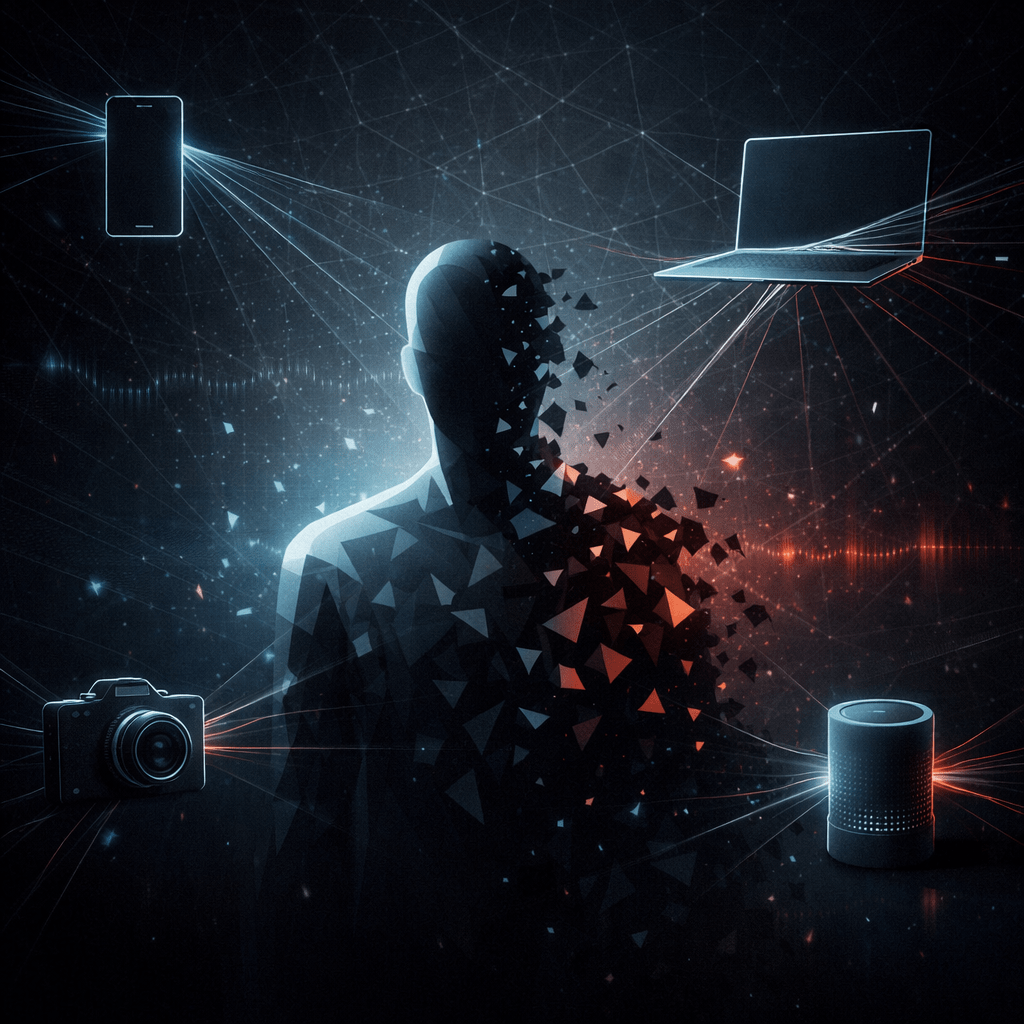
We live in an age of miracles. In 2026, our gadgets heal us, entertain us, and connect us, among other things. But beneath the sleek glass and “smart” interfaces lies a silent bargain we never signed up for. Every device you own — from the watch on your wrist to the car in your driveway and the TV in your den — is a silent “witness” to your life.
These devices are not just tools; they are tactical sensors. They harvest “digital breadcrumbs” — tiny, seemingly harmless data points about your location, your pulse, your habits, and your conversations. While a single crumb tells very little, a thousand crumbs tell your entire story.
Starting today, we bring to you a three-part series – The Invisible Dragnet – that pulls back the curtain on this global surveillance Web. We aren’t only looking at the State’s spies; we are looking at the gadgets you bought and paid for that are used to make money off your data by private players. We will identify the “Silent Observers” in your pocket, explain how AI builds a “Digital Double” of your life, and finally, provide you with the tactical shield needed to reclaim your privacy in a world that never stops watching.
Part – 1
When we think of “spies,” we often imagine a stranger in a trench coat or a high-tech government agency. But in 2026, the most effective surveillance isn’t hiding in the shadows; it is sitting on your kitchen counter, hanging on your living room wall, and even lying in your child’s toy box. This is what experts call “Surveillance by Convenience.” Others call it “Surveillance Capitalism”.
The average layperson around the globe has traded their privacy for a “smart” life; that, too, without realization. While buying or using these devices, they rarely realize that these also act as tactical sensors, constantly gathering “digital breadcrumbs” for a global network of data brokers.
How Apps Harvest Your Private Life
One of the most aggressive sensors in the “Invisible Dragnet” is the apps living on your smartphone, Tablet, etc.. Many apps — ranging from simple weather trackers to flashlight utilities — function as “Trojan Horses” for the data brokerage industry. These apps often request permissions that have nothing to do with their stated purpose, such as a calculator app requiring access to your microphone or a basic game demanding your real-time GPS coordinates. Once granted, these apps run silently in the background, harvesting “digital breadcrumbs” like your physical location, the Wi-Fi networks you pass, and even the other devices you interact with.
This data is rarely kept by the app developer alone; instead, it is funneled into a massive ecosystem of “Surveillance Capitalism”. Through “Software Development Kits” (SDKs) embedded in the code, your personal movements are packaged and sold to third-party data aggregators in milliseconds. By correlating your GPS data with your browsing history and purchasing habits, these brokers create a high-resolution profile that predicts your future behavior. Because this tracking happens at the code level, simply closing the app is often insufficient to stop the leak, making a rigorous audit of app permissions a primary tactical defense for any private citizen.
Here are the primary red flags to watch for during your next app audit:
- “Always On” Location Access: The Risk: This creates a minute-by-minute map of your life, revealing where you live, work, pray, and seek medical care.
- The Red Flag: A calculator, flashlight, or basic offline game requesting location.
- Microphone Access: The Risk: Used to capture “ambient” audio or ultrasonic beacons from retail displays to track which aisles you walk down.
- The Red Flag: Any app that does not have a voice-command or recording feature (like a simple photo filter app).
- Local Network Access: The Risk: This allows the app to “see” every other device on your Wi-Fi—your printer, your spouse’s phone, and your smart fridge—mapping your entire household ecosystem.
- The Red Flag: News apps or social media platforms that don’t need to cast to a TV.
- Bluetooth Access: The Risk: Bluetooth is often used for “Indoor Positioning Systems” (IPS) to track your exact movements inside malls or airports where GPS fails.
- The Red Flag: A retail app that asks for Bluetooth the moment you walk through the store doors.
- Contacts & Call Logs: The Risk: This isn’t just about you; it’s about mapping your social “graph.” It identifies your inner circle, which is high-value data for political and social profiling.
- The Red Flag: Any app that is not a dedicated messaging or email platform.
The Sensors in Your Pocket and on Your Wrist
We often think of surveillance as something stationary — a camera on a pole — but the most intimate data collection is mobile. Your smartphone and smartwatch are the primary “Tactical Sensors” of the modern age. Beyond just GPS, these devices use accelerometers to track your unique “gait” (how you walk) and barometers to know exactly what floor of a building you are on.
According to a landmark report by the Irish Council for Civil Liberties, the “Real-Time Bidding” (RTB) system — the machinery behind digital ads — broadcasts the location and behavior of a person in the US or Europe hundreds of times every day. This creates a permanent record of your movements, your health spikes, and even your proximity to other people, all without a single government agent being involved.
The Two-Way Mirror in Your Living Room
Your television is no longer just a screen; it has become a sophisticated monitoring station. Modern Smart TVs use a technology called Automatic Content Recognition (ACR). This software identifies every frame of every show, movie, or advertisement you watch—even if you are using an external device like a gaming console or a DVD player.
The strategy here is subtle. By tracking your viewing habits, companies can infer your political leanings, your religious interests, and even your current emotional state based on what you binge-watch. This data is then sold to brokers who build a “Strategic Profile” used to target you in ways that go far beyond simple advertising. According to research by the Center for Digital Democracy, these tracking systems have turned the home into a data-collection hub that operates without any meaningful consumer consent.
The Informants in Your Kitchen and Laundry Room
The push to connect every appliance to Wi-Fi — from your refrigerator to your washing machine—is rarely about helping you. In many cases, it is about the manufacturer’s bottom line. Smart appliances track your usage patterns to a granular degree. They know exactly when you are home, how often you eat, and what specific brands you prefer.
The danger lies in the “inference.” If your smart oven is linked to a grocery app, data brokers can analyze your health habits. Are you buying fresh produce, or is your diet mostly frozen meals? This “breadcrumb” eventually finds its way to insurance companies or health researchers who may use it to adjust your “risk” profile. As noted by Privacy International, the “Internet of Things” (IoT) has effectively removed the walls of the private home, allowing corporate eyes to watch your most mundane daily routines.

Sign up for “The Privacy Vault” by My Data Zero. This is our free membership area that gives readers the tools, knowledge, and community platform to stay secure in a connected world.
The Trojan Horses in the Toy Box
Perhaps the most unsettling form of tactical surveillance targets the most vulnerable members of the household. Modern “connected” toys — dolls, robots, and tablets — often feature cameras and microphones meant for “interactive play.” These devices record a child’s voice to process commands in the Cloud. However, these microphones often stay “hot,” capturing background conversations and intimate family moments.
Unlike adults, children cannot navigate privacy settings. A toy that “listens” is essentially a microphone in the center of your family life. The Electronic Frontier Foundation (EFF) has frequently warned that these devices often have weak security protocols, making them easy targets for data harvesting or even remote access by unauthorized parties.
The City as a Laboratory
Surveillance has moved from the home to the sidewalk. Smart city “kiosks,” upgraded streetlights, and even modern billboards now use Computer Vision to analyze crowds. These systems don’t just see a person; they categorize you by age, gender, and even your perceived “sentiment” (if you look happy or stressed).
Companies have expanded their AI capabilities so that cameras can recognize individuals by the clothes they wear or the bags they carry, even if their faces are covered. As noted by the EFF in its “Street-Level Surveillance” project, these private feeds are often shared directly with State fusion centers, effectively creating a 24/7 global tracking network owned by corporations but accessible to the State.
The “Silent Observer” Privacy Audit
To help you “blind” these observers, we’ve developed this tactical checklist. To begin with, focus on these five high-impact areas to reclaim your life’s boundaries and escape the trappings of “Surveillance Capitalism”.
- Audit Your TV Settings: Navigate to your TV’s “Privacy” or “Terms of Service” menu. Locate the ACR or “Viewing Data” toggle and switch it to OFF. This stops the TV from reporting your screen activity back to the manufacturer.
- Isolate the Sensors: If possible, set up a “Guest Wi-Fi Network” on your router specifically for your smart appliances. This creates a digital wall that prevents a “smart” toaster or vacuum from seeing the personal data stored on your laptop or smartphone.
- Mute the Microphones: For any device that doesn’t strictly require voice commands to function, use the physical mute button or a simple piece of privacy tape over the camera lens. If a device requires an “Always On” microphone but provides no benefit to you, consider if the convenience is worth the “breadcrumb” it creates.
- Reset Your Mobile Ad ID: On your smartphone (Android or iOS), navigate to Privacy > Advertising and “Reset” or “Delete” your Advertising ID. This breaks the link between your physical devices and your digital marketing profile.
- The One-Minute Audit: Go to your phone’s Settings > Privacy > Permission Manager. If an app hasn’t been used in 30 days, delete it. If it is a tool you use occasionally, change its permissions to “Ask Every Time” or “Only While Using App.”
Reference:
- Center for Digital Democracy: Big Data Surveillance and the TV Screen
- Privacy International: The Hidden Cost of the Internet of Things
- Electronic Frontier Foundation (EFF): Privacy Risks of Connected Toys
- Consumer Reports: How to Turn Off Tracking on Your Smart TV
- Irish Council for Civil Liberties: The Biggest Data Breach
- Electronic Frontier Foundation: Street-Level Surveillance Project
- The New York Times: One Nation, Tracked
In Part 2: We look at “The Digital Double”. We’ll show you how AI takes these tiny breadcrumbs — like how often you vacuum or what your kids say to their toys — and builds a “Ghost Version” of you that can impact your bank account, your insurance, and your freedom.
Leave a Reply