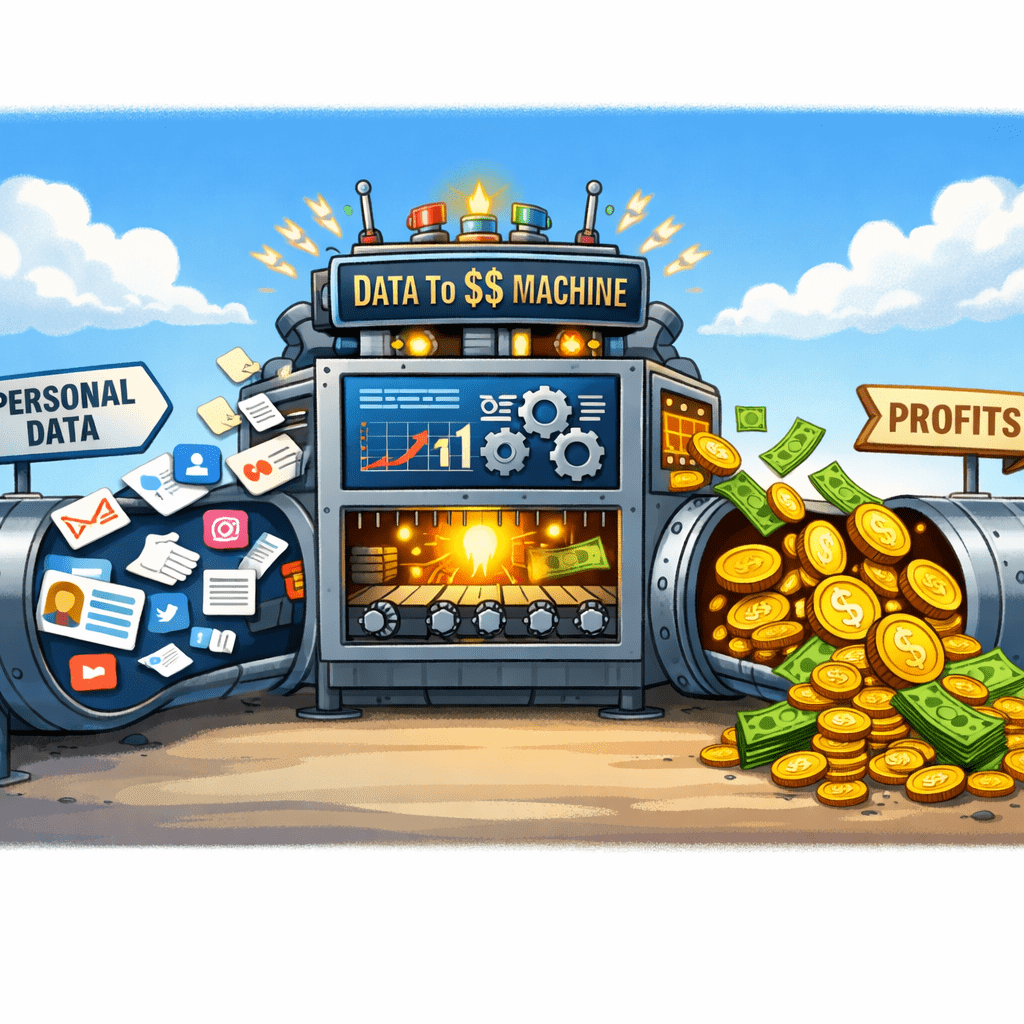
Personal data has become the new currency of the digital economy, quietly powering everything from targeted advertising to algorithmic decision-making. Companies collect, analyse, and trade information about our behaviour, preferences, locations, and relationships because it has enormous economic value.
While this commodification often funds “free” online services, it also shifts control away from individuals. Once data is collected, it can be legally (and often, illegally) copied, sold, combined with other datasets, and reused in ways users never anticipated. This creates risks such as loss of privacy, increased surveillance, and manipulation, where people are nudged toward certain purchases, opinions, or behaviours based on detailed personal profiles.
Listen to Our Podcast On “Personal Data Commodification And Some Ways You Can Stop That!”
(Made by Google Notebook Lm)
The dangers grow when data is misused, breached, or applied unfairly.
Sensitive information can be exposed through hacks, sold on data markets, or used to discriminate in areas like employment, insurance, or credit. Because data is persistent, mistakes or outdated information can follow individuals for years, affecting opportunities long after the original context is gone. Treating personal data as a commodity also normalises the idea that privacy is something to be traded away rather than protected. Understanding these risks is crucial: if personal information is currency, then practising caution, demanding transparency, and supporting stronger data protections are ways individuals can reclaim some power in an increasingly data-driven world.
How to Practise Good Personal Data Hygiene
Practising good personal data hygiene is an essential skill in a world where so much of our lives happens online. Just as physical hygiene protects our health, data hygiene helps protect our privacy, finances, and reputation.
A good starting point is:
- Be mindful about what information you share and where. Before entering personal details on a website or app, ask whether the information is truly necessary and whether the service is trustworthy.
- Check for secure connections (such as “https”) and read privacy policies, at least in summary, to understand how your data will be used.
- Oversharing on social media can also create risks, so it’s wise to limit public posts that reveal sensitive details like your location, routine, or contact information.
- Strong password practices are another pillar of data hygiene. Use unique, complex passwords for different accounts rather than reusing the same one everywhere. Password managers can help generate and store these securely. Where possible, enable two-factor authentication, which adds an extra layer of protection even if a password is compromised.
Regular maintenance matters too. Periodically review your online accounts and delete those you no longer use, as old accounts can become easy targets for attackers. Keep your devices and software up to date, since updates often fix security vulnerabilities. Backing up important data ensures you can recover it if your device is lost, stolen, or attacked by malware.
Finally, stay alert to common threats. Phishing emails and messages often try to create urgency or fear to trick you into revealing information. Taking a moment to verify the sender and avoid clicking suspicious links can prevent serious harm.
Good personal data hygiene is not about paranoia; it’s about awareness and habits. By making thoughtful choices and doing regular check-ups, you can significantly reduce risks and stay in control of your digital life.