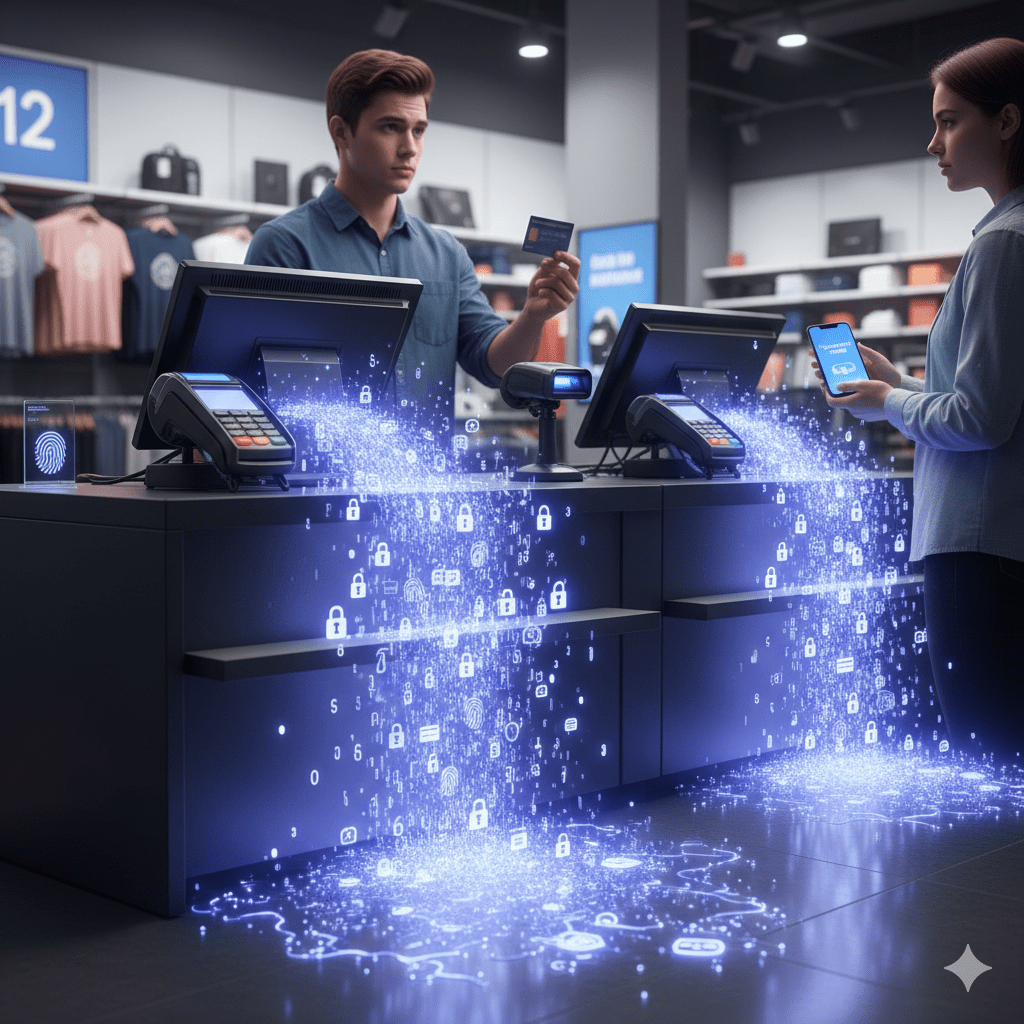
When you walk into a major retailer like Home Depot, you likely notice the security cameras. You might assume they are there for a simple reason: to stop shoplifters and keep the parking lot safe. You might even feel a sense of protection. But hold on, did you know about the hidden retail data privacy risks involved?
But as recent reports have exposed, there is a hidden side to this “security”, something that we at My Data Zero have warned you about from this very website, time and again. A growing controversy involving Home Depot’s partnership with surveillance firm “Flock Safety” has revealed that the data collected during your Saturday morning hardware run is being funneled into a massive surveillance web, one that many customers never realized they were joining.
The data you give away for “safety” or “convenience” can, and will, be used against you or your community in ways you never authorized.
The “Mission Creep” of Personal Data
The central issue at Home Depot, which has drawn the ire of its own investors, is a phenomenon known as “mission creep.” This happens when data collected for one specific, benign purpose (like preventing retail theft) is quietly funneled into a completely different, often more aggressive system (like federal immigration raids).
The Home Depot Controversy: A Wake-Up Call
According to recent reports, a group of Home Depot investors is now demanding an urgent review of the company’s data-sharing practices. The core of the issue? Flock Safety’s AI-powered license plate readers.
While Home Depot uses these cameras for “retail security,” the data they collect has been linked to Immigration and Customs Enforcement (ICE) operations. Even if a corporation doesn’t “sell” your data directly to federal agencies, their third-party tech partners often share database access with local police, who then pass it up the chain.
The result? Your license plate, your vehicle type, and your location history are being used for federal surveillance—all because you parked your car to buy a lightbulb.
Home Depot Official Response: Statements have appeared in mainstream media clarifying that while the company does not directly grant federal agencies access to their Flock Safety cameras, they “cannot legally interfere with federal enforcement agencies” once data is shared with local police partners.
Here is how the loop works:
- The Collection: You drive into a parking lot. An AI-powered Automated License Plate Reader (ALPR) logs your plate, your vehicle make, and your time of arrival.
- The Sharing: The retailer shares this database with local police to help catch “shoplifters.”
- The Pivot: Local police then grant access to that same database to federal agencies like ICE.
- The Result: Your trip to buy a box of nails has inadvertently contributed to a surveillance net used for mass deportations and targeted raids.
What Are the Real “Retail Data Privacy Risks”?
To reiterate, the Home Depot situation is a textbook example of Mission Creep. This is the primary risk facing consumers today: data collected for a “good” reason (safety) is eventually used for a “different” reason (surveillance).
- Surveillance Capitalism: Retailers aren’t just selling products; they are collecting data. From license plate readers to facial recognition and loyalty program tracking, your physical movements are being digitized.
- The Third-Party Loophole: You might trust a specific brand, but do you trust their software providers? Most retailers use dozens of third-party vendors who may have much looser privacy standards.
- De Facto Federal Tracking: When private companies build massive surveillance networks, they create “turnkey” systems for the government to step in and monitor citizens without a warrant.
Be Wary of Whom You Share Your Data With
The message here is central and urgent: Be extremely wary of whom you share your personal data with. In 2026, personal data is the only asset that becomes more dangerous the longer it exists. Information you gave to a store five years ago for a “Pro Account” discount can be cross-referenced today by AI tools that didn’t even exist when you signed up.
Personal Security Advisory: How to Protect Yourself
To mitigate retail data privacy risks, follow these “Data Minimum” rules:
- Opt-Out by Default: If a cashier asks for your phone number, email, or zip code, simply say, “No thank you.” In most cases, it is not required for the purchase.
- Avoid High-Surveillance Zones: Be aware that “smart” parking lots are active data collection hubs. If privacy is a priority, consider the trade-offs of shopping at locations that use Automated License Plate Readers (ALPR).
- Read the “Third Party” Clause: Check the privacy policies of your favorite apps. Look for phrases like “sharing with law enforcement” or “service provider access.”
- Use Privacy-First Tools: Support retailers that have transparent data-deletion policies and those that refuse to participate in warrantless surveillance networks.
The Bottom Line
Privacy isn’t about having “something to hide”; it’s about maintaining the right to control your own life. The Home Depot controversy proves that once your data leaves your hands, you lose the ability to decide how it is used against you. Retail data privacy risks do exist, and you need to be wary.
Think twice before you click “Accept” or hand over your phone number. Your data belongs to you. Keep it that way.
This advisory is part of our ongoing commitment to personal digital sovereignty and privacy awareness.
Reference:
Reuters: Amid ICE raids, some Home Depot investors want to know how law enforcement uses its surveillance data (Published Jan 16, 2026)
- Interfaith Center on Corporate Responsibility (ICCR): Investor Response to Home Depot Surveillance & ICE Partnership
- CFO Brew: Home Depot investor group requests review of data-sharing with law enforcement (Published Jan 20, 2026)
- Zevin Asset Management: From Parking Lots to Police Databases: Home Depot’s Data Privacy Dilemma
- Lookout Santa Cruz: What to know about Flock Safety’s automated license plate readers
- Reddit (Local Reporting): ICE Sightings around New Jersey & Home Depot Arrests (Jan 16, 2026)
ICE Sparks Data Concerns | Investors Question Home Depot Surveillance Use