
So far in this mini-series on digital IDs, we’ve talked about what you can do — the digital spring cleaning, the strong passwords, and the shift to decentralized services. Those are the smart locks and alarm systems for your own digital home.
But what happens when the biggest threats to your data aren’t hackers, but the laws that govern who can collect, share, and use your information?
To achieve true, lasting digital privacy, we need to go beyond personal actions and build “Robust Legislative Firewalls”. This means enacting strong, protective laws designed to create an impenetrable barrier between powerful entities (governments and corporations) and your personal data.
What is a Legislative Firewall?
A legislative firewall is a set of strong, specific laws that legally restrict the collection, sharing, and mandatory surrender of personal data. They act as a legal barrier to prevent data overreach, much like a network firewall blocks unauthorized access.
The idea isn’t just to make corporations say they’ll protect your data; it’s to make it illegal and costly for them not to.
Three Critical Walls We Need to Build
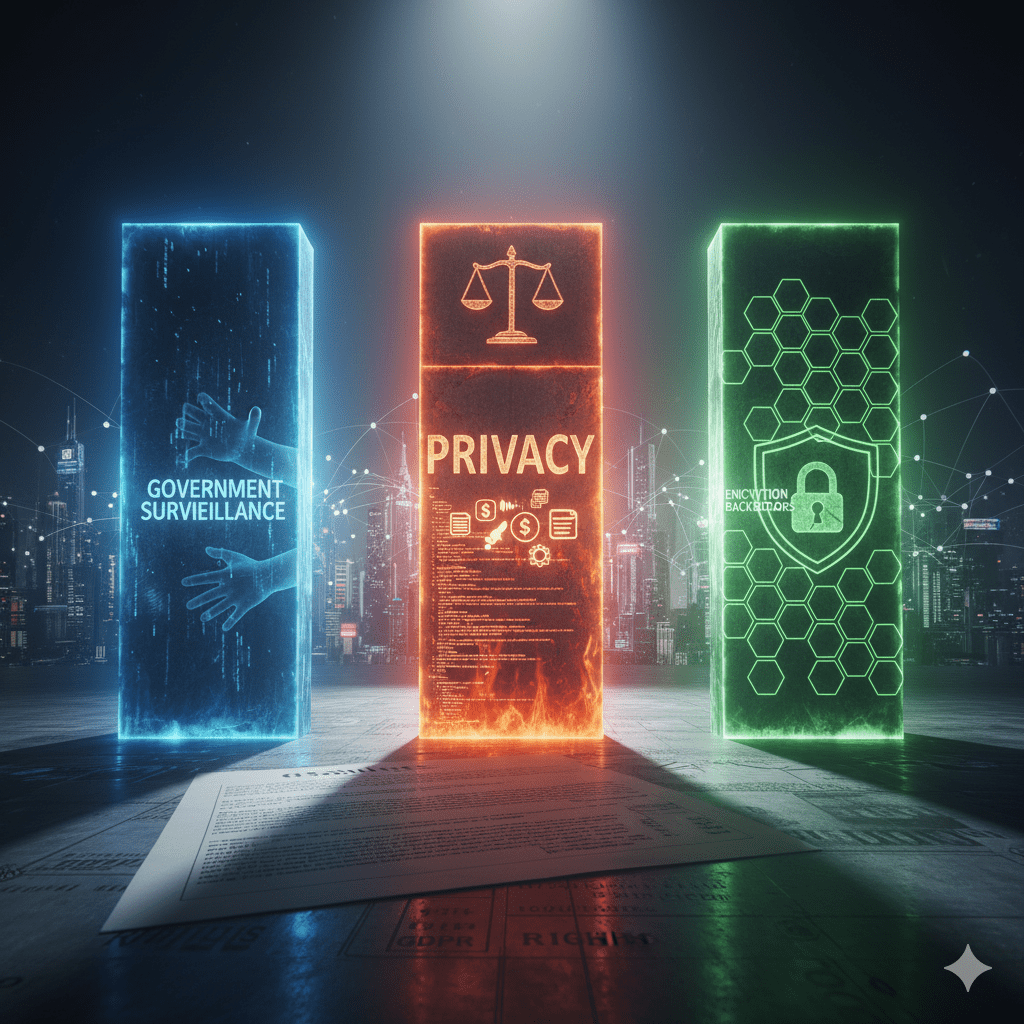
To truly protect your digital assets, these firewalls must address three major areas where your data is most vulnerable:
1. The Wall Against Data Surveillance and Overreach
This firewall ensures that governments and intelligence agencies cannot conduct mass, indiscriminate surveillance on ordinary citizens. It protects against the dragnet collection of your digital life — your emails, browsing history, and location data — without a specific, court-issued warrant based on probable cause.
- What it looks like: Laws requiring judicial review (a judge’s approval) before any mass data access, and strict limitations on how long non-suspect data can be retained.
- Why it matters to you: It ensures that your basic right to privacy is preserved, meaning that your digital life is not treated as public property available for constant scrutiny by the state.
2. The Wall Against Corporate Data Exploitation (Mandate Data Minimization)
While we have principles like GDPR’s Data Minimization, this firewall makes it a legally mandated standard. It explicitly bans the practice of companies collecting data simply because they can, forcing them to justify every single data point they collect as absolutely essential for the service to function.
- What it looks like: Laws that require privacy by default and by design. Companies would face massive penalties for collecting “just-in-case” data. It would prohibit the selling or sharing of personally identifiable information with third parties without explicit, non-coerced consent for that specific use.
- Why it matters to you: It shrinks your digital footprint at the source. If companies are legally blocked from collecting your health data just to sell you tailored insurance ads, they simply won’t collect it.
3. The Wall Against Mandatory Backdoors and Encryption Sabotage
This is the most technical and critical firewall. It protects the integrity of the security tools we rely on, like end-to-end encryption. A legislative firewall here would prohibit governments from mandating that tech companies build “backdoors” or “master keys” into their encrypted products.
- What it looks like: Laws that recognize strong, unbreakable encryption as a fundamental right. It prevents a scenario where a company is legally forced to create a weakness in its software, which would inevitably be exploited by criminals and hostile states alike.
- Why it matters to you: If the encryption on your messaging app or password manager has a built-in backdoor, it offers zero privacy. This firewall ensures the tools you use to protect yourself are as strong as advertised.
The Power of the Policy
Individual actions (like using a password manager) are crucial, but legislative firewalls are the only tool that can force systemic change. They shift the burden of responsibility from the individual (who has to constantly guard their data) to the institutions (who must legally prove they are protecting it).
This is why advocating for strong privacy legislation—by supporting privacy organizations and pressuring your elected officials—is one of the most powerful things you can do to safeguard your data and secure the future of the decentralized, private Internet.
(This is the last of the 5-part mini series on digital identity.)
What do you think is the most urgent legislative firewall we need right now? Share your thoughts below!