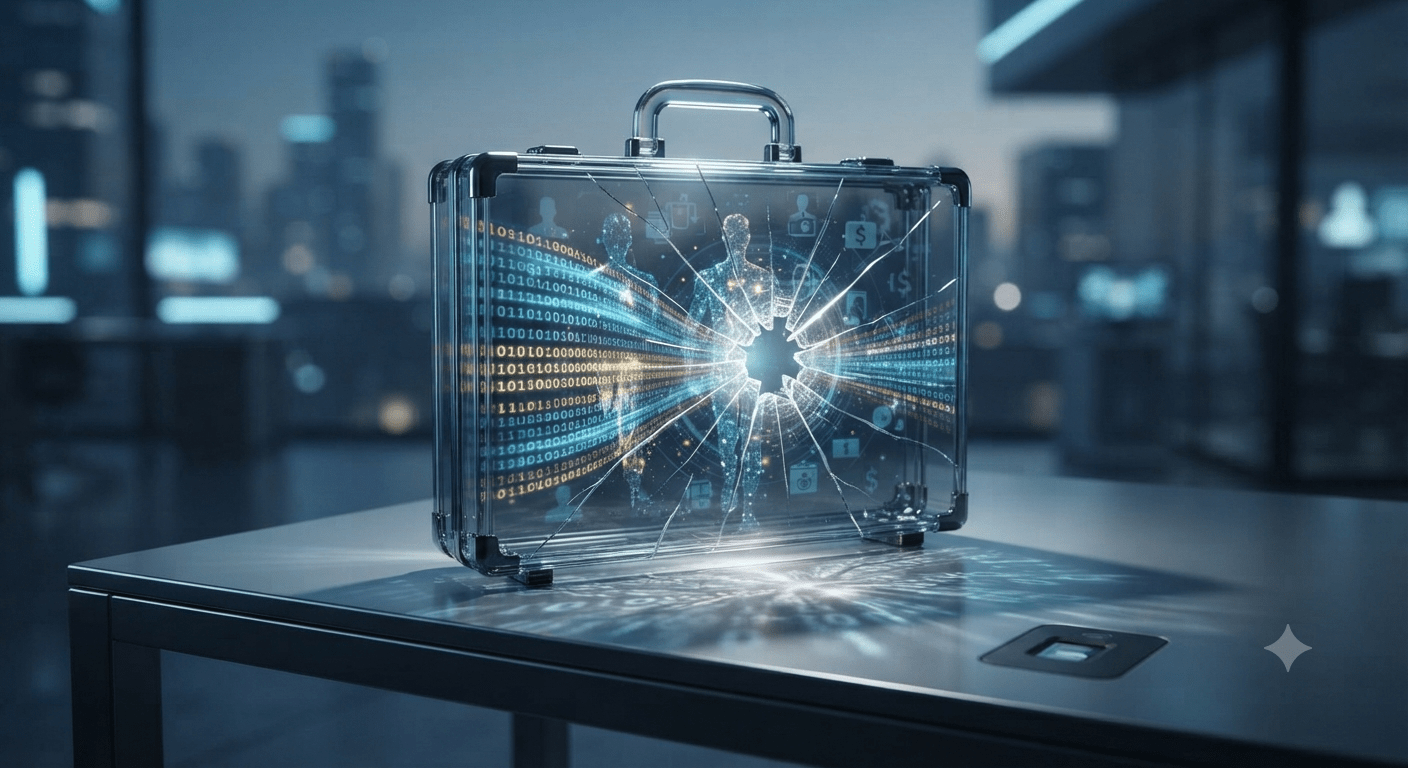
The digital landscape today often feels like carrying your entire life in a glass briefcase. Every time you visit a doctor, pay a credit card bill, or interact with a government agency, you are handing over a piece of that glass. Most of us assume that the institutions holding this information have a steel vault to keep it safe. Unfortunately, as seen with increasing frequency, that vault is often more like a curtain. So which are the most targeted industries for cyberattacks?
Hackers are currently obsessed with three specific sectors: healthcare, financial services, and public administration* (See box at the end of this post.)
Why So?
For those of us on the receiving end of these services, understanding why this happens is the first step toward better personal protection. Research consistently shows these three areas are among the most frequently targeted sectors.
Recent data indicates that public administration frequently leads in the number of breach victims, while healthcare remains the most expensive industry for data breaches, costing millions per incident due to the extreme sensitivity of patient records and the life-threatening risks associated with operational downtime.
Most Targeted Industries for Cyberattacks
Why are these sectors such massive targets? Think of it like a bank robbery. A small neighborhood bakery might have a cash register, but a major bank has the main vault. Healthcare, finance, and government hold the motherlode of identity data. Your medical records, your social security number, and your financial history are the building blocks of a fake identity. Once a hacker has these, they do not just steal money; they steal the ability to be you.
Healthcare is particularly vulnerable because hospitals often operate on legacy systems. Imagine trying to run a modern, high-speed computer network using the plumbing of a building from the 1970s. That is the reality for many medical facilities. Furthermore, they face a unique type of pressure: if their systems go down, lives can be at stake. Hackers know that a hospital is much more likely to pay a ransom to regain access to their data than a retail store would be.
Financial institutions and government agencies face a different challenge. They are the gatekeepers of our financial existence and our citizenship status. Because these entities are so interconnected with our daily lives, a breach here creates a cascading effect. If your government record is compromised, your tax filings, your passport status, and even your voting information could be at risk.
Tips on How To Protect Yourself
So, how can you protect yourself when you cannot control the security of the institutions you are forced to use? You must become the guardian of your own perimeter.
First, stop treating your password like a generic key. If you use the same password for your email as you do for your bank, you are giving a burglar the key to your house, your car, and your safe all at once. Use a password manager. These tools act like a high-security keychain, creating complex, unique passwords for every site you visit. You only have to remember one master password.
Second, embrace multi-factor authentication everywhere. Think of this as having a double lock on your front door. Even if a hacker manages to pick the first lock by stealing your password, they will still be stopped by the second lock, which usually requires a temporary code sent to your phone or a hardware key. It is the single most effective way to prevent unauthorized access.
Third, be cautious with your digital footprint. Oversharing on social media is like telling the entire world exactly what is in your house and when you are not going to be home. Cybercriminals often use details from your social posts to guess your security questions or craft convincing phishing emails that look like they come from your bank or doctor.
Finally, keep a watchful eye on your accounts. Many people only check their bank statements once a month. In 2026, that is too slow. Use mobile banking alerts to notify you of every transaction in real-time. If you see a charge you did not make, you can act immediately. Additionally, consider freezing your credit. This acts like a deadbolt on your credit report, preventing identity thieves from opening new accounts in your name.
We cannot stop the rise of cybercrime, and we certainly cannot force every organization to upgrade their systems overnight. However, by changing how we handle our own data, we can move from being easy targets to being difficult, resilient individuals who are much harder to compromise. Keep your guard up, stay informed, and treat your personal data with the same care you would treat your physical wallet.
Bet You Didn’t Know This?
*Recent research confirms that healthcare, financial services, and government entities consistently face the highest volume of cyberattacks. A 2025 analysis of data compromises by Alta Technologies highlighted that financial services overtook healthcare as the most breached industry that year, recording hundreds of incidents involving commercial banking and insurance. Meanwhile, healthcare remains a uniquely high-stakes target; the IBM Cost of a Data Breach Report for 2025 noted that the healthcare sector carries the highest average breach cost of any industry, a title it has held for fourteen consecutive years due to the extreme sensitivity of patient records and the life-threatening risks associated with operational downtime.
Government and critical infrastructure sectors are equally pressured, with reports indicating that nearly 95% of organizations in these spaces have suffered a data breach over the last two years. These attacks often leverage sophisticated hybrid methods, including ransomware and supply chain compromises, to exploit the complex, often legacy-heavy IT environments that many public agencies still use. For these sectors, the motivation for hackers often shifts beyond simple financial theft to include espionage, disruption of essential public services, and the acquisition of high-value identity data that remains useful for years after an initial compromise.
Reference:
https://www.mimecast.com/content/industries-most-vulnerable-to-cyber-attacks
https://newsonair.gov.in/government-releases-digital-threat-report-2025–26-for-financial-sector
https://www.cloudsek.com/knowledge-base/healthcare-cybersecurity
https://www.hipaajournal.com/average-cost-of-a-healthcare-data-breach-2025
https://www.idtheftcenter.org/wp-content/uploads/2026/01/2025-ITRC-Annual-Data-Breach-Report.pdf
https://papers.govtech.com/2025-Data-Breach-Investigations-Report-143825.html